
 Switch
 Homepage
 facebook
 IG
 Other Hospital
 CMUH App
Patient-reported outcome measures (PROMs) | Stroke Center
Patient-reported outcome measures (PROMs)
Tracking Health Recovery Outcomes in Stroke Patients
Listening to Patients' Voices, Understanding Their Recovery Experiences
Successful stroke treatment is not only about saving lives, but also about helping patients regain their functional abilities and reintegrate into their families and communities after discharge.
At China Medical University Hospital (CMUH), we use the internationally recognized EQ-5D-5L health questionnaire to continuously monitor patients' health status following discharge. By incorporating patients' own perspectives and experiences, we aim to make patient-reported outcomes an essential component of healthcare quality improvement.
2025 Follow-up Outcomes
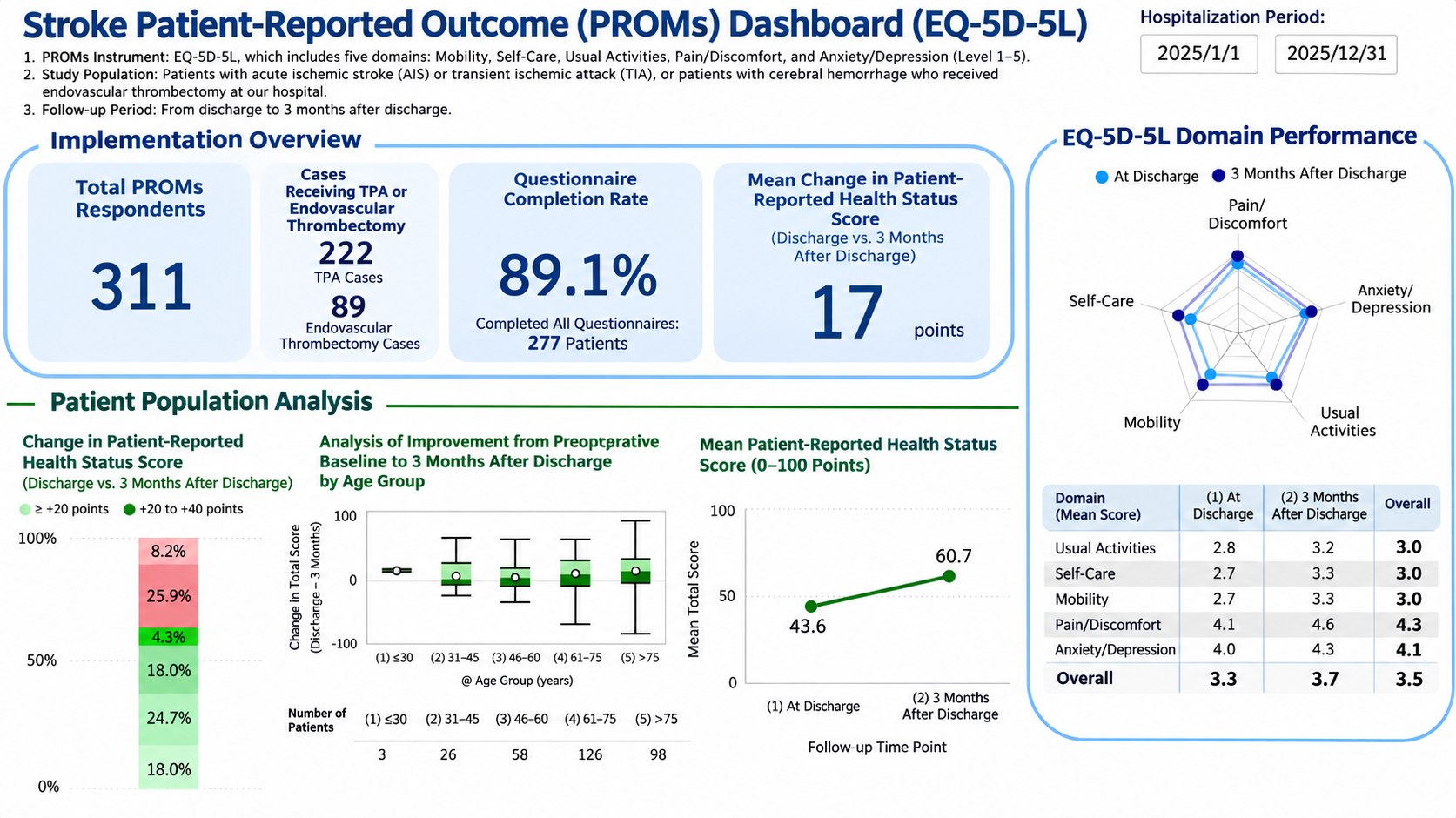
In 2025, a total of 311 patients were enrolled in follow-up monitoring, including:
-
222 patients who received intravenous thrombolysis (tPA) or endovascular thrombectomy (EVT).
-
89 patients diagnosed with subarachnoid hemorrhage (SAH).
-
277 patients completed the follow-up questionnaire, achieving an overall completion rate of 89.1%.
Significant Improvement in Patient-Reported Health Status
Patients' self-rated health status was assessed at discharge and three months after discharge. The results demonstrated:
At Discharge:43.6 points
3 Months After Discharge:60.7 points
Average Improvement:+17 points
These findings indicate that most patients experienced continued improvements in their perceived health status and gradual recovery in quality of life following acute stroke treatment and subsequent care.
More Than 70% of Patients Experienced Improved Health Status
Follow-up analysis revealed that:
-
Approximately 72% of patients reported improvements in their self-rated health scores compared with discharge, with some achieving improvements of more than 20 points.
-
Positive recovery trends were observed across different age groups.
These findings suggest that continued rehabilitation, regular follow-up visits, and ongoing health management after stroke may contribute to improved overall health and quality of life.
Patient-Centered Care: Continuously Improving Healthcare Quality
At CMUH, we continuously utilize Patient-Reported Outcome Measures (PROMs) to monitor patients' recovery experiences and health status, incorporating their perspectives into ongoing healthcare quality improvement initiatives.
Moving forward, we remain committed to enhancing stroke care services, supporting better functional recovery and quality of life, and advancing our goal of "Treating Diseases, Caring for Lives."
 Facebook
 IG
 YouTube